

Description
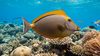
Blonde Naso Tang (Naso elegans) Large *Photo is a representation of the fish you will receive.*
The Blonde Naso Tang (Naso elegans), also commonly known as the Lipstick Tang or Orangespine Unicornfish, is a stunning, large marine fish prized for its vibrant, contrasting colors and active, graceful swimming behavior. Native to the Indian Ocean and Red Sea, this species is a popular, generally reef-safe, and personable choice for large saltwater aquariums.
Appearance and Coloration
- Body: As they mature, the body changes from a juvenile grayish-brown to a stunning bluish-gray, often with a "blonde" or pale, silvery-gray hue.
- Facial Markings: They feature a distinctive black "mask" between the eyes and mouth, with bright yellow, skin-like lips that give them the "lipstick" name.
- Fins and Tail: The dorsal fin is a vivid yellow. Adult males develop long, elegant tail streamers on a lyre-shaped caudal fin.
- Defensive Spines: They possess two bright orange, razor-sharp spines (scalpels) on each side of the caudal peduncle (base of the tail).
Size and Growth
- Maximum Size: They can reach up to 16–18 inches (40–46 cm) in length.
- Growth Rate: They are relatively fast-growing, with juveniles sold at 2–3 inches often growing to 6–7 inches within 12 to 18 months.
Temperament and Behavior
- Active Swimmer: They are very active, requiring large amounts of open space for swimming.
- Temperament: Generally peaceful with other species, but can be territorial towards other Tangs, especially those of the same genus (Naso).
- Reef-Safe: Considered reef-safe, but may occasionally nip at large-polyped stony corals or clam mantles.
- Habitat: Primarily a herbivore, they graze on benthic algae.
Aquarium Requirements
- Tank Size: A minimum of 180 gallons (680+ liters) is essential, with larger tanks (300+ gallons) recommended for adults.
- Environment: Prefers strong current, ample swimming room, and plenty of rockwork for grazing.
- Diet: Primarily herbivorous, requiring a consistent diet of marine algae, seaweed sheets (Nori), and spirulina to maintain health and color.
- Compatibility: Best kept as a single specimen or in pairs in very large systems.
Care Level
- Difficulty: Moderate; they are hardy once acclimated but require pristine water conditions and frequent feeding.
- Longevity: 10–15+ years with proper care.


